
Pool Heater Repair in Cave Creek, AZ
Gas, propane, electric and heat pump repairs. Call (480) 800-0993.

Schedule Service!
Professional Pool Heater Repair in Cave Creek, AZ
Most Heaters That Will Not Fire Fail on One of Eight Things
Most pool heater repair in Cave Creek, AZ comes down to one of about eight things, and most of them are cheap. Knowing which one, before anybody starts buying parts, is the whole job.
We handle pool heater repair across Cave Creek, Carefree, Desert Hills and the rest of north Maricopa County, on gas, propane, electric resistance and heat pump systems.
Gas heaters are their own category. A fault on a gas appliance is a safety job before it is a comfort job, and there is a line past which this stops being a homeowner task entirely.
If the unit has reached the end of its life we will say so plainly, the same as we would with any other equipment replacement. That becomes a pool heater installation, and it is a different decision with different numbers.
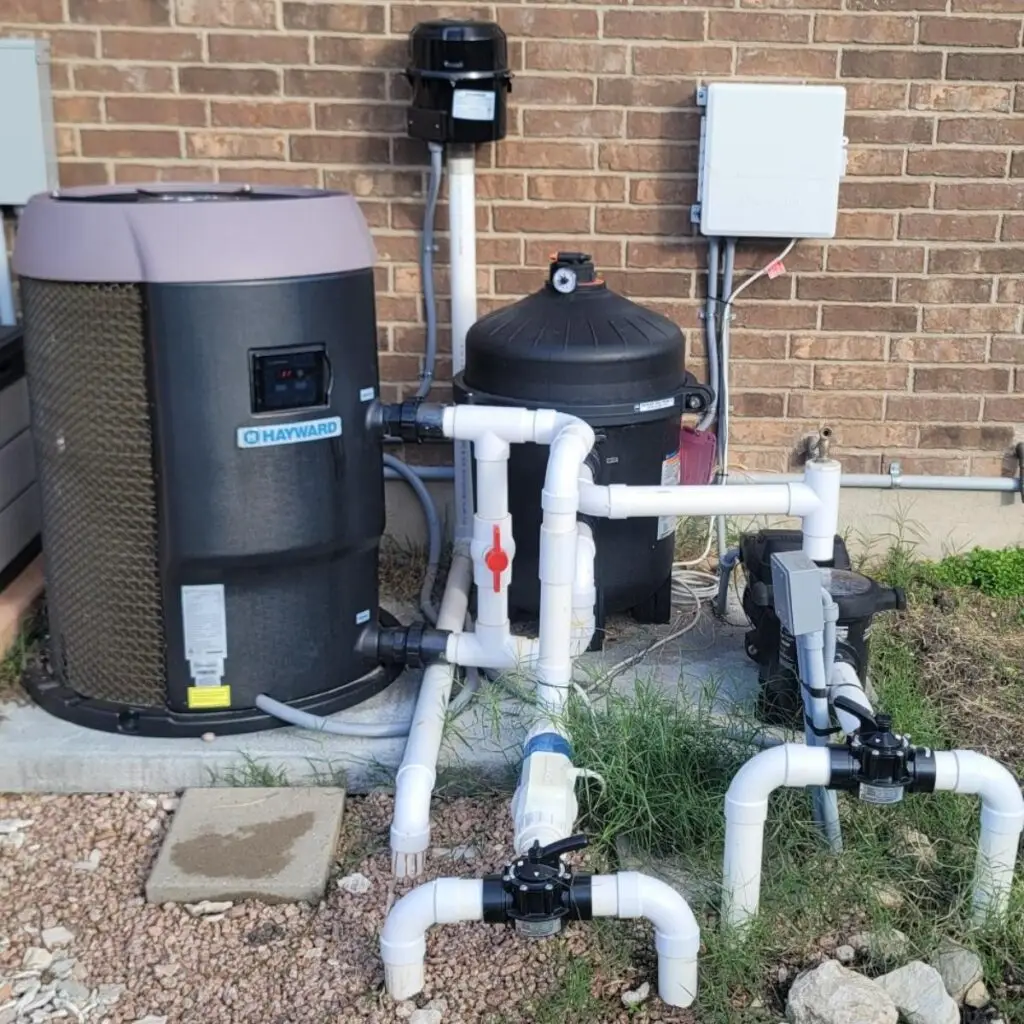
Heater down? Ask Bahama Blue Pool & Spa for a free repair quote
Pool Heater Brands We Repair




Pool Heater Not Working? Start Here
Before we are called out, this is the list a technician runs. Several of these you can check yourself in two minutes.
Pool Heater Not Turning On
Work through these in order:
- Is the system switch on
- Is the thermostat actually set above current water temperature
- Is the pump running with enough flow to keep the low-flow switch from tripping
- Is the gas valve in the on position
- Is the pilot lit, on units that have one
- Is the gas supply valve open
- Are all the plumbing and filter valves open
- If a bypass is fitted, is it adjusted correctly
Low flow is the most common answer, and it frequently has nothing to do with the heater itself. A dirty filter or a struggling pump starves the heater and the low-flow switch shuts it down to protect itself. That is why we check filtration before we open the heater.
If you hear clicking or sparking and it still will not light, stop there and call someone. That is an ignition fault on a gas appliance.
Pool Heater Not Heating Enough
The heater runs but the water never gets where you want it. Causes we find, roughly in order:
- Thermostat set lower than you think
- Thermostat out of calibration, or failed
- Pressure switch out of adjustment
- Reversed water connections, usually after other work was done on the pad
- Scale on the heat exchanger cutting heat transfer
- The heater is simply undersized for the pool, so heat loss beats heat input
That last one is not a repair at all. If heat loss exceeds what the heater can put in, no part will fix it, and on cold mornings a cover does more for you than a service call.
Pool Heater Leaking Water
Where and when it leaks tells you what it is.
A heat exchanger that leaks all the time has usually corroded, and low pH is the classic cause. Freeze damage does the same thing, which is why these leaks turn up at spring start-up rather than in the moment they happen.
A heater that only leaks while the burner is lit is often doing something else entirely. That is condensation, which happens when very cold water hits a hot exchanger. A missing or damaged bypass does it, and so does too much flow from an oversized pump.
Pilot Light Will Not Stay Lit
Low gas pressure, not enough air supply, or bad venting. With propane, check the tank has fuel.
Then look up. Sprinklers aimed at the heater and water running off a roof edge put pilots out constantly, and it gets diagnosed as an ignition fault for years. Heater placement sometimes needs a wind stack to fix properly.
Black or Dark Exhaust on a Gas Heater
Soot on top of the heater, or dark exhaust, points at low gas pressure or inadequate air supply and venting.
Do not keep running it. Incomplete combustion is what that appearance means, and both causes need a qualified technician.
Pool Heater Error Codes
Modern heaters tell you what is wrong, though the code rarely means what the panel implies.
Most codes across Hayward, Pentair, Raypak and Jandy units fall into five families.
Flow faults are the most common code on any brand, and they usually point at filtration or the pump before the heater. Ignition lockout means the unit tried to light a set number of times and gave up, which puts gas supply, igniter, flame sensor and venting on the list. High limit means it got too hot and shut itself down, often from low flow again or restricted venting. Sensor faults are a thermistor or water sensor reading out of range, or simply a dead sensor. Pressure switch codes are frequently an adjustment problem where people assume a failed part.
A code is a starting point. Two units can throw the same number for different reasons, so we test the component before anyone swaps whatever the code names.
We work on Hayward, Pentair, Raypak, Jandy and Zodiac equipment.
Pool Heaters We Repair
Gas and Propane Heaters
The most common heaters up here, because they recover temperature fast. Faults concentrate in burners, igniters, flame sensors, gas valves and pressure switches.
Propane adds its own variables. Venting, gas pressure and regulator condition all have to be right before anything else is worth checking.
Electric Resistance Heaters
Mostly on spas and smaller bodies of water. The elements corrode and burn out, and hard water speeds that up considerably.
Diagnosis is continuity and voltage testing to isolate element, thermostat, relay or wiring.
Heat Pump Pool Heater Repair
Heat pumps move heat instead of making it, so how much they deliver depends on the air around them. Colder air means less heat available to extract, which is exactly why yours underperforms on the January mornings you most want it.
That is how the technology works, and no repair changes it. Genuine faults are refrigerant leaks, capacitor failures, dirty coils, restricted airflow and sensor problems.
Pool and Spa Combination Heaters
One heater serving both usually fails at the diverter valves, the automation, or the flow conditions between the two. We test the whole changeover, not just the heater. If pool automation is controlling it, that goes in the diagnosis too.
Why Gas Pool Heater Repair Is Not a DIY Job
This is the one piece of pool equipment where the honest advice is to stop.
Gas heater faults have to be corrected by a qualified technician working from the manufacturer’s installation and operation manual. The parts are ordinary enough. The consequence of getting it wrong on a gas appliance is a fire or an explosion.
Two things to treat as hard rules:
- If any part of the heater has been underwater, do not operate it. Call someone to inspect and replace what needs replacing.
- If it clicks or sparks and will not light, leave it alone.
Also, the top of an operating heater gets hot enough to burn. A vent cap brings that down, and plenty of units do not have one.
Checking your thermostat, your valves and your filter is sensible homeowner work. Anything involving gas, combustion or venting belongs with someone certified for it, and PHTA is the body that runs that certification in this industry.
What Happens on a Pool Heater Repair Visit
We inspect the unit first: corrosion, debris, rodent damage, general condition.
Then we test components individually with meters and gauges. Igniters, flame sensors, thermostats, pressure switches, blowers, control boards and safety controls each get tested on their own.
Flow gets checked too, every time. Pump performance, filter pressure and valve positions, because low flow causes more heater shutdowns than any component failure. If the filter is the real problem, that is pool filter repair or a clean, and we will tell you.
Then you get the diagnosis, the options and the price, and we test the full cycle after the repair. Temperature rise, ignition, cycling and safety shutoffs.
How Long Should a Pool Heater Last?
Gas heaters commonly run 8 to 12 years, heat pumps often longer, and both numbers move a long way depending on water chemistry.
Water balance is what decides it. Low pH corrodes heat exchangers from the inside, and hard water scales them up from the same surface. A Cave Creek heater on a neglected pool can be finished in half the time one on a maintained pool lasts.
Most of what shortens a heater’s life is chemistry drifting for months at a time, which is the part a weekly pool service route is holding steady in the background.
Why Cave Creek Conditions Are Hard on Heaters
Calcium is the main problem, and heaters attract it.
Calcium becomes less soluble as water gets hotter, so it comes out of solution fastest at the hottest surface in your system. That surface is the heat exchanger. Scale there cuts heat transfer, makes the unit work harder for less output, and if it builds into the plumbing it restricts flow and clouds the water. The same calcium shows up as the white band on your pool tile.
Dust and storm debris foul burners, igniters and sensors, the same grit that loads up a pool filter after a monsoon blow. Rodents nest in heater cabinets through cooler months and chew wiring. Enclosed equipment with restricted airflow overheats and trips its safety shutoff.
None of this is exotic. It is what desert equipment does, and it is the argument for having a heater looked at in October while you still have a choice about it.
What Pool Heater Repair Costs
We price by what failed. A thermostat, a pressure switch or an igniter is a modest job. A heat exchanger is the expensive end, and at that point the repair-or-replace conversation becomes real.
What moves the number is the part, the brand, and whether parts are still made for that model. Older discontinued units are where repairs stop making sense.
You get the diagnosis and the price before we do the work.
Book Your Pool Heater Repair
Tell us the brand, what the panel is showing, and whether the pump is running. That is usually enough to know what we are walking into. Buying a house with a heated pool? A pool inspection checks the heater before you commit.
Call (480) 800-0993, email info@bahamabluepoolandspa.com, or schedule service online. Other equipment giving trouble at the same time sits under pool repairs.
We cover Cave Creek, Carefree, Desert Hills, Tatum Ranch, Desert Ridge, North Phoenix and North Scottsdale. The full service area is here.
Our Service Areas
- Desert Ridge
- Tatum Ranch
- Scottsdale
- Cave Creek
- North Phoenix
Pool Heater Repair Questions
The questions Cave Creek homeowners ask us most about heater faults, lifespan and cost. If yours is not here, call (480) 800-0993.
Most pool heaters can be repaired. Igniters, flame sensors, thermostats, pressure switches and control boards are all replaceable parts. Replacement becomes the better option when the heat exchanger has corroded through or parts are no longer made for that model.
Cost depends on the failed part. Igniters, thermostats and pressure switches are modest repairs, while a heat exchanger sits at the expensive end and often triggers a repair-or-replace decision. We diagnose and quote before starting any work.
Gas pool heaters commonly last 8 to 12 years and heat pumps often longer. Water chemistry decides most of it, because low pH corrodes heat exchangers and hard water scales them. Balanced water can double a heater's working life.
Gas heater faults need a qualified pool equipment technician rather than a general handyman. Incorrect work on a gas appliance can cause fire or explosion. Bahama Blue Pool & Spa repairs gas, propane, electric and heat pump units across Cave Creek, AZ.
Check the system switch, the thermostat setting, and whether the pump has enough flow to satisfy the low-flow switch. Then check the gas valve, the pilot, and that all filter and plumbing valves are open. Low flow is the most common cause.
Usual causes are a thermostat set too low or out of calibration, a pressure switch out of adjustment, scale on the heat exchanger, or reversed water connections. If the heater is undersized for the pool, heat loss simply beats heat input.
A constant leak usually means a corroded heat exchanger, often from low pH or freeze damage, and it typically shows up at spring start-up. A leak only while the burner runs is often condensation from a missing bypass or excessive flow.
Most codes fall into flow faults, ignition lockout, high limit, sensor faults or pressure switch faults. Flow codes are the most common and usually point at the filter or pump. The same code can mean different things on different units.
No. Gas heater faults must be corrected by a qualified technician following the manufacturer's manual, because incorrect work can cause fire or explosion. Never operate a heater that has been underwater, and stop if it clicks or sparks without lighting.
Yes. Heat pump faults are usually refrigerant leaks, capacitor failures, dirty coils, restricted airflow or sensor problems. Note that heat pumps deliver less heat in colder air by design, so reduced output on cold mornings is not always a fault.