
Pool Pump Installation in Cave Creek, AZ
Sized to the plumbing you already have. Call (480) 800-0993.

Schedule Service!
Professional Pool Pump Installation in Cave Creek, AZ
Most Pumps Get Chosen by Horsepower, Which Is the Wrong Number
Most pumps get chosen by horsepower. That is the wrong number to start with.
The right number is flow rate. It comes out of your pool volume and how many hours you want the water turned over. Horsepower is what you land on afterwards, once the plumbing has had its say.
Pool pump installation in Cave Creek, AZ means matching a pump to a circulation system that already exists. Your pipe sizes, your filter, your heater, and the drain covers in the floor of the pool. Change one and the arithmetic moves.
We install variable-speed, dual-speed and single-speed pumps across Cave Creek, Carefree, Desert Hills and north Maricopa County. It sits alongside the rest of our pool equipment installation work.
If your pump can be fixed instead, we will say so. That is pool pump repair, and on a sound wet end it is usually the cheaper answer.
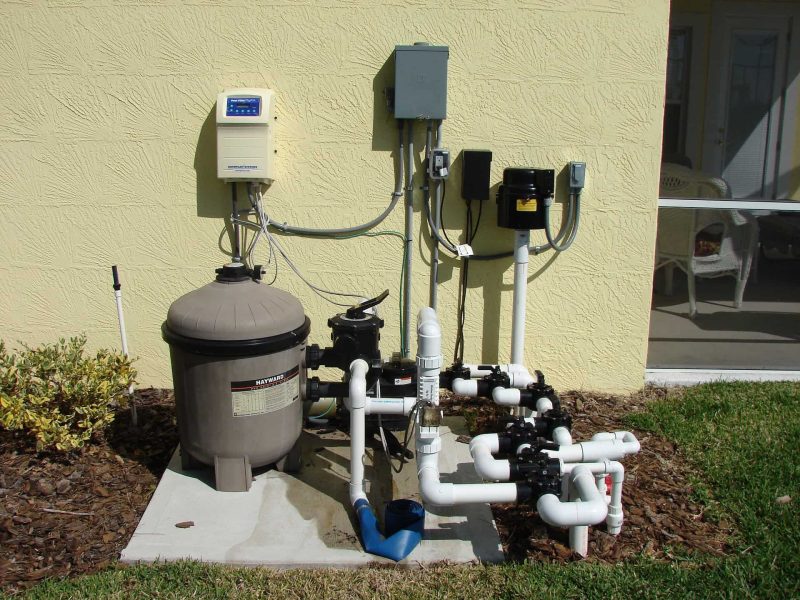
Need a new pool pump? Ask Bahama Blue Pool & Spa for a free quote
Pool Pump Equipment We Install




What Size Pool Pump Do You Need?
Start With Turnover
Sizing a pool pump in Cave Creek starts with one number, and the horsepower label is not it. Turnover is the time it takes to push a volume of water equal to your whole pool through the filter. Six hours is the standard figure for swimming pools. A spa is thirty minutes, because there is less water and more of you in it.
Once you have the turnover you want, the flow rate falls out of it:
Flow rate (gpm) = pool volume ÷ turnover hours ÷ 60
A 15,000 gallon pool on a six hour turnover needs 15,000 ÷ 6 ÷ 60, which is about 42 gallons per minute.
That is the minimum. Systems get designed at roughly 25% above it, so the real target is closer to 52 gpm, because a filter loads up and flow drops as it does.
Then Total Dynamic Head
Flow rate on its own does not pick a pump. What picks a pump is flow rate against resistance.
Total dynamic head is every bit of resistance the water meets on the way round. Pipe, every fitting, the filter, the heater, the outlets, the inlets, even the height of the return fittings above the water. It is why two Cave Creek pools of identical volume can need different pumps.
You can measure it on a running system. Multiply the vacuum gauge reading by 1.133 for the suction side, multiply the pressure gauge by 2.31 for the pressure side, and add the two together.
Worth doing once a year with a clean filter. If the number drifts, either the impeller is wearing or your filter media is done.
Why Bigger Is Not Better
This is the part that surprises people.
Oversizing a pump is not harmless insurance. Higher flow can push past the maximum flow velocity your anti-entrapment drain covers, filter and piping are rated for. Drain covers carry that rating for a reason, and fitting a bigger pump to an existing system is how it quietly gets exceeded.
Undersizing has the opposite problem and gives you inadequate flow, cloudy water and a filter that never quite keeps up.
So the honest answer to “what size pool pump do I need” is the one that hits your flow rate against your actual head, and nothing above it.
One more thing if you are replacing a heater or filter at the same time. Changing either one changes the head, so the flow rate has to be checked again afterwards. That is what keeps the system inside its drain cover rating.
Pool Pump Types We Install
Variable-Speed Pumps
The default recommendation on almost every Cave Creek pool now, and the energy case is the reason.
A variable-speed pump lets you run slow for long hours instead of fast for short ones. Turnover counts total gallons moved over the day, so a slower pump running longer gets you there on far less power. They are much quieter too, which matters when the pad sits six feet from a neighbor’s wall.
They talk to automation properly as well, which single-speed pumps cannot. Adjustable RPM means the schedule can be set precisely instead of guessed at.
Dual-Speed Pumps
High and low, nothing in between. More efficient than an old single-speed and cheaper up front than a variable-speed.
A reasonable middle ground on a smaller pool or an older system where the full variable-speed spend is hard to justify.
Single-Speed Pumps
One speed, running flat out whenever it runs. Energy-efficiency standards have pushed these out of most new installations, and we generally fit one only where warranty compatibility or an unusual equipment configuration requires it.
If you still have one, it is almost certainly the most expensive thing on your equipment pad to run.
Why a Variable-Speed Pool Pump Pays for Itself in Cave Creek
Cave Creek pools run long hours. Eight to twelve a day through summer, sometimes more when it is properly hot, because heat and dust load the water faster than a shorter run can clear.
That is the usage pattern a variable-speed pump is built for. Power draw climbs far faster than speed does, so halving the speed and doubling the run time moves the same water on a fraction of the electricity. Long run times make the arithmetic work, and Cave Creek has long run times.
ENERGY STAR makes the same point from the other direction: a single-speed pump is set fast enough for the pool cleaner, so it runs faster than filtration ever needs and burns the difference.
There is a second benefit nobody mentions. A pump running gently at low RPM is easier on the seals, the bearings and the filter than one slamming to full speed twice a day.
What Pool Pump Installation Costs
Two line items: the pump, and the work to fit it.
The pump depends on type and size. Variable-speed units cost more than dual-speed, and dual-speed more than single-speed, and that ordering is exactly inverted once you look at running costs.
The installation depends on your equipment pad. A like-for-like swap onto existing unions and a suitable electrical supply is the quick case. Re-plumbing an awkward pad, upgrading the electrical circuit, or correcting pipe that was undersized when the pool was built all add time.
The things that move the number most:
- Whether the existing plumbing lines up with the new pump’s ports
- Whether the electrical supply suits the pump you are fitting
- Whether the filter and heater need re-checking against the new flow
- Whether you want automation programmed at the same time
We price the pump and the installation separately so you can see which is which. Every pool pump installation quote in Cave Creek is broken out that way.
When to Replace Your Pool Pump
You probably need a new pump if:
- The current one is more than 7 to 10 years old
- It is loud, leaking, or vibrating more than it used to
- Energy bills are higher than they should be
- Water flow is poor even after the filter has been cleaned
- The motor will not start, or shuts off on its own partway through a cycle
- You are adding a heater, a salt system or automation
Some of that list is a repair, though, and it is worth knowing which. A worn seal, a cracked lid, a blocked impeller or a failed capacitor are all pool pump repair jobs on a pump that is otherwise sound.
Replacing the motor alone is possible too. The replacement has to develop the same total horsepower as the one coming out. That means nameplate horsepower multiplied by the service factor. The impeller loads the motor right up to that figure, so the headline number on the label undersells what it has to do.
We will tell you which of the three you are looking at before you spend anything. That assessment is part of quoting any pump replacement in Cave Creek.
Pump Brands and Automation We Install
We install the manufacturers found on Cave Creek equipment pads: Pentair, Hayward, Jandy and Zodiac.
If you run automation, we integrate the new pump into it so speeds and schedules are controlled from the same place as everything else. That covers Pentair IntelliCenter, Hayward OmniLogic and Jandy iAquaLink, with remote access from a phone or tablet once it is set up.
Pairing a variable-speed pump with pool automation is where the energy saving actually gets realised, because the schedule runs itself instead of depending on you remembering.
Staying with the brand already on your pad usually keeps the plumbing and the controls simpler.
Our Pool Pump Installation Process
1. On-Site Assessment
Pool volume, plumbing layout, pipe sizes, filter type, heater, electrical supply and the space on the pad. Every pool pump installation in Cave Creek starts with this visit. We work out your required flow rate and check it against the head your system actually has.
2. Recommending the Pump
Type, size and speed range, with the running cost explained next to the purchase price. We are not going to sell you the biggest pump on the shelf. On a pool circulation system that counts as a fault.
3. Removing the Old Pump
Out with the old unit, electrical supply made safe, and an honest look at the plumbing while everything is open.
4. Fitting and Connecting
New unions, correct pipe runs, proper electrical connection and a level mount. A pump sitting above the water line has to be self-priming, since that is the type that can clear air out of the housing on its own.
5. Startup and Programming
We prime it, check flow and pressure, confirm it holds prime, and listen for cavitation. On a variable-speed pump we set the initial speed schedule, sync it with your automation, and show you how to change it.
We also re-check the pool filter and heater against the new flow before we leave, because a new pump changes what the rest of the pad is seeing.
Looking After a Pool Pump in Cave Creek Dust
A few things about this climate that shorten pump life, none of them obvious.
Most pool pump motors are open drip-proof designs. They pull outside air through themselves to stay cool. Dust clogs those passages, and a motor that cannot breathe overheats. After a monsoon dust event the vents are worth a look.
Shade helps, but only the right kind. A motor cover that blocks the sun and also traps the hot air the motor is producing makes things worse. Air has to keep moving through it.
Do not hose down the area around the motor while it is running.
And a running motor that is too hot to touch is not necessarily in trouble. Some are rated to 266°F, which is far past what your hand will tolerate.
One local note on altitude, since it comes up. The rule about stepping up a horsepower for thinner cooling air starts at 3,300 feet. Cave Creek sits around 2,553, so it does not apply here. Your pool heater sizing is a different story, because that correction starts from sea level.
Keeping the water balanced helps as well. Scale in the system raises resistance, and the pump pays for it. That is part of what a weekly pool service route is doing in the background.
Book Your Pool Pump Installation
Tell us your pool size, what pump you have now, and roughly how many hours a day you run it. That is enough for us to work out what you need before we arrive. Buying a house with a pool? A pool inspection covers the pump along with everything else.
We fit pumps on in-ground pools, pool and spa combination systems, pools with water features, custom pools, and rental or vacation properties, as well as new builds and equipment pad rebuilds.
Call (480) 800-0993, email info@bahamabluepoolandspa.com, or schedule service online. Going further on the pad at the same time? There is pool light installation and the rest of our pool equipment installation work.
We cover Cave Creek, Carefree, Desert Hills, Tatum Ranch, Desert Ridge, North Phoenix and North Scottsdale. The full service area is here.
Our Service Areas
- Desert Ridge
- Tatum Ranch
- Scottsdale
- Cave Creek
- North Phoenix
Pool Pump Installation Questions
What Cave Creek homeowners ask before putting a new pump in. If yours is not here, call (480) 800-0993.
Cost splits into the pump and the fitting. The pump depends on type and size, with variable-speed above dual-speed above single-speed. Fitting depends on whether the plumbing and electrical supply already suit it. We quote both separately.
Divide your pool volume by your turnover hours, then by 60, for the flow rate in gallons per minute. Six hours is the standard turnover for a pool. Then match that flow against your system's total dynamic head.
No. Too much flow can exceed the rating of your anti-entrapment drain covers, filter and piping. Oversizing a pump on an existing circulation system creates a safety problem where you wanted a performance gain.
It is the total resistance to flow in your system: pipe, fittings, filter, heater, inlets and outlets. Measure it by multiplying the vacuum gauge by 1.133 and the pressure gauge by 2.31, then adding the two.
On a Cave Creek pool running eight to twelve hours a day, usually yes. Power draw climbs much faster than speed does, so running slower for longer moves the same water for far less electricity.
A like-for-like swap onto existing plumbing and a suitable electrical supply is typically a single visit. Re-plumbing the pad, upgrading the circuit, or programming automation from scratch extends it.
Repair when the wet end is sound and a seal, lid, impeller or capacitor has failed. Replace when the housing is cracked, the pump was undersized from the start, or the age and running cost no longer justify another repair.
Often yes, but the new motor must develop the same total horsepower as the old one, which is nameplate horsepower times the service factor. A larger motor raises suction entrapment risk and a smaller one gives inadequate flow.
Long enough to turn the water over. Many Maricopa County pools need eight to twelve hours, longer in peak heat. A variable-speed pump lets you extend that time at low speed without the energy penalty.
Yes. Changing the pump changes the flow through everything downstream, so the filter and heater need checking against the new rate. Replacing a filter or heater changes the head as well and calls for the same re-check.