
Pool Automation in Cave Creek, AZ
Fitted, programmed and explained. Call (480) 800-0993.

Schedule Service!
Professional Pool Automation in Cave Creek, AZ
Automation Is a Relay Box With a Schedule In It
Automation is a relay box with a schedule in it. Everything else is packaging.
That sounds dismissive and it is not meant to be, because the schedule is the whole point. A variable-speed pump only saves you money if it actually runs slow for long hours, and it only does that reliably if something other than a person is deciding when.
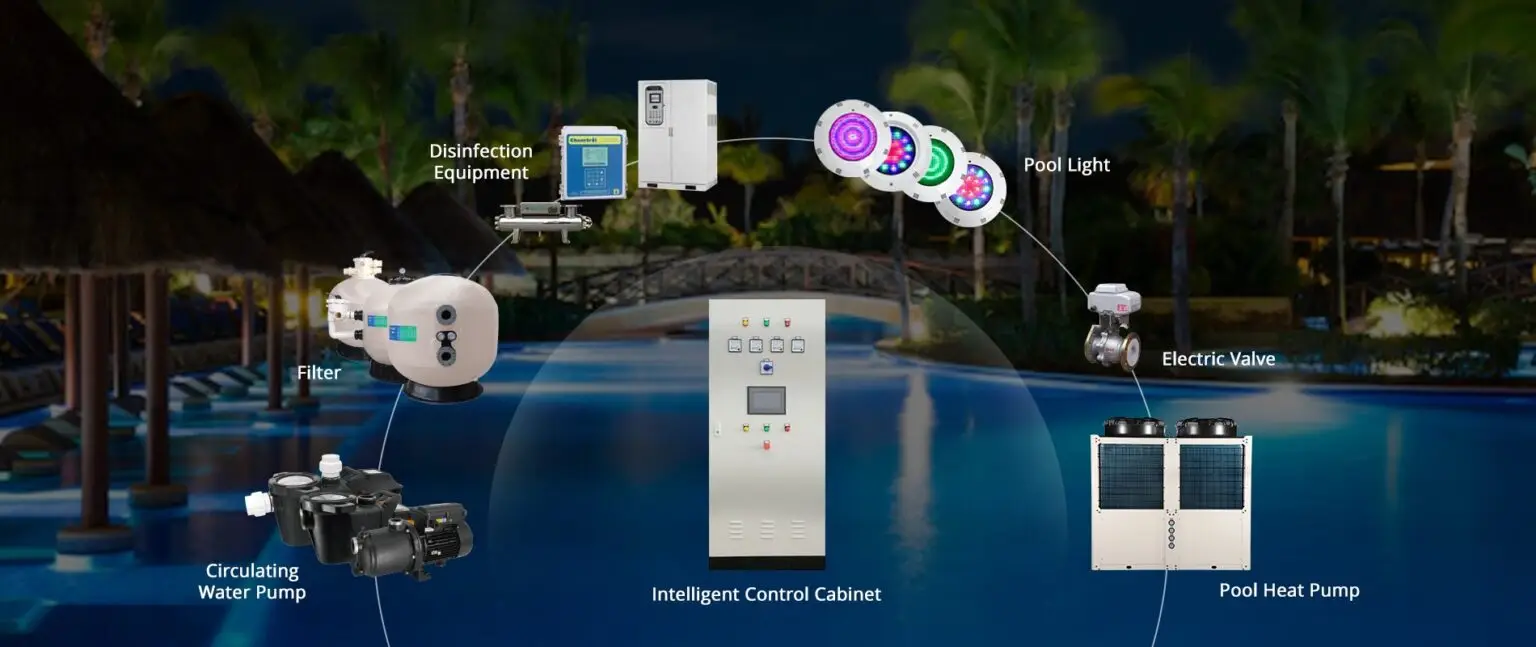
Pool automation in Cave Creek, AZ means putting your pump, heater, lights, valves and salt cell under one controller. That controller then runs a schedule built around how you actually use the pool. If you have been searching pool automation near me, that is the job.
We install and program Pentair, Hayward and Jandy systems across Cave Creek, Carefree, Desert Hills and north Maricopa County, alongside the rest of our pool services.
Want your pool on your phone? Ask Bahama Blue Pool & Spa for a free quote
Pool Automation Brands We Install




What Pool Automation Actually Controls
Worth being concrete, because “smart pool” covers a lot of ground and some of it will not apply to your Cave Creek equipment pad.
A controller does three kinds of work.
Relays switch things on and off: the pump, the lights, a booster pump, a water feature. Valve actuators turn the valves that send water somewhere else, so pool becomes spa or a waterfall comes on. And low voltage signaling talks to equipment that can actually hear it, setting a variable-speed pump’s RPM, a heater’s temperature, or a color-changing light’s scene.
That third one is where the difference lies between smart pool control that feels genuinely automatic and a system that is just an expensive timer.
A relay can turn an old single-speed pump on. It cannot tell that pump to run at 1,400 RPM, because the pump has no way to listen. Same with an old heater that only has a dial.
So what automation gives you depends heavily on what is already on your equipment pad.
Can Your Existing Pool Equipment Be Automated?
This is the first thing we check in Cave Creek, and the answer is usually “partly”.
Equipment that talks back properly:
- Variable-speed pumps from the last decade or so
- Heaters with a communication port, which most modern gas heaters have
- Color-changing LED lights on a compatible protocol
- Salt chlorine generators from the same manufacturer family
- Motorized valve actuators, which can be added to most existing valves
Equipment that can only be switched:
- Single-speed pumps, which a relay turns on and off and nothing more
- Older heaters with a mechanical thermostat
- Single-color lights
There is no shame in the second list. A relay-only setup still gets you scheduling, remote access and the ability to turn the spa on from the car. It just will not do the things the brochure photographs are selling.
If your pump is single-speed, automating it is a smaller win than replacing it. We would usually suggest the pool pump installation first and the automation second, because that ordering saves more money.
Pentair IntelliCenter, Hayward OmniLogic and Jandy iAquaLink
The honest summary for a Cave Creek pool: pick the one that matches the equipment you already own, unless you are replacing the pad anyway.
All three do the same core job. They schedule the pump, fire the heater, run light scenes, throw valves and give you an app. Where they differ is how well they talk to equipment from a different manufacturer.
Pentair IntelliCenter is the deepest system if your pad is largely Pentair. It handles a lot of circuits and it integrates tightly with their pumps, heaters and IntelliChem chemistry controller.
Hayward OmniLogic is the equivalent if your pad is Hayward, and the same logic applies in reverse.
Jandy iAquaLink is the Jandy and Zodiac answer, and it is often the sensible choice on a pad already running Jandy valves and a JXi heater. We fit Intermatic controllers as well.
The thing nobody tells you is that cross-brand control is where these systems get awkward. A controller from one family will switch a competitor’s pump on and off through a relay, but the fine-grained speed control usually needs the matching brand. That is not a conspiracy, it is just how the protocols went.
So the useful question is not which system is best. It is which system is best for the equipment sitting on your pad right now.
Chemical Automation and What It Cannot Do
Some systems will dose chemicals for you, and on a Cave Creek pool it is worth being straight about the limits.
An ORP controller measures oxidation reduction potential in millivolts, which is an indirect reading of how much oxidizing power your water has. The probe signals the controller to switch a feeder on or off. When it works, it holds your chlorine steadier than a person could.
Three things to know before you buy one.
It is indirect. ORP does not measure chlorine, it measures oxidizing capacity. At low chlorine levels a small change swings the reading a lot, and at high chlorine levels a big change barely moves it.
High cyanuric acid makes it lie. ORP readings decline as stabilizer rises, because chlorine bound up with cyanuric acid has less oxidizing potential. So a pool with high stabilizer reads low on ORP even when the chlorine number looks fine, and the controller keeps feeding.
Probes foul and drift. Monthly cleaning is the usual advice, more often when cyanuric acid is present, and probes need calibrating against a known standard. A fouled probe responds slowly and reads wrong, and the only way to tell fouling from stabilizer is to clean it and watch what the reading does.
None of which makes chemical automation a bad idea. It makes it a thing that still needs testing. Nobody should stop checking their water because a controller is doing the dosing. And if your pool has gone green with a working ORP controller on it, the stabilizer is the first thing to look at.
Why Pool Automation Pays Off on a Cave Creek Pool
The energy case is the strongest argument, and it depends on something specific to here.
Cave Creek pools run long hours through summer. A variable-speed pump saves money by running slowly for a lot of those hours instead of quickly for a few. The saving is real and it is large.
But it only happens if the schedule is actually followed, every day, including the days you are away and the days you forget. That is what a controller does that a person does not.
The second thing is the heater. A heater firing on a schedule, or only when the spa is called for, costs far less than one left available around the clock. Automation is what makes that practical.
Third, and less obvious: equipment that runs on a sensible schedule lasts longer. A pump ramping gently to a set speed is easier on seals and bearings than one slamming to full speed twice a day.
What Pool Automation Costs
Priced as the controller, the actuators, and the labor to wire and program it. Every pool automation quote in Cave Creek is built the same way.
The controller is the biggest single item and it scales with how many circuits you need. A simple setup running a pump, a heater and lights costs less than one running those plus four valve actuators, a salt cell and a water feature.
Actuators are priced per valve, so a pool and spa combination with automatic changeover costs more than a pool on its own.
Labor depends on the pad. A clean panel with room to work and modern equipment already in place is the quick case. An old panel, a crowded pad, or equipment that needs replacing first all add to it.
What moves a pool automation quote:
- How many circuits you need controlled
- How many valves need actuators fitted
- Whether your pump, heater and lights can be controlled or only switched
- Whether the existing electrical panel has capacity
- Whether you want chemistry automation as well
Retrofitting Automation to an Existing Pool
Most of what we do in Cave Creek is retrofit work on pools that already exist.
A retrofit means fitting a controller to a pad that was never designed for one. That usually involves a new panel, actuators on existing valves, low voltage runs to the equipment that can accept them, and relays for the equipment that cannot.
Two things tend to catch people out.
Electrical capacity is the first. The controller needs a supply and so does everything it switches, and an older panel may not have room. That gets established before anything is ordered.
Wi-Fi coverage is the second, and it is a real problem on Cave Creek properties where the equipment pad is a long way from the house. An automation system that cannot reach your network is a wall panel with extra steps. We check signal at the pad before committing to a system that depends on it.
Our Pool Automation Installation Process
1. Survey the Equipment Pad
Every pool automation installation in Cave Creek starts with an inventory. What pump, what heater, what lights, what valves, what salt cell, and which of them can be properly controlled instead of merely switched.
2. Check Power and Signal
Electrical capacity in the panel, and wireless coverage at the pad. Both decide what is possible before any system gets recommended.
3. Recommend the System
Matched to the equipment you own, with what it will and will not control spelled out. If the honest answer is that half your pad can only be switched, you hear that before you spend.
4. Fit and Wire
Controller mounted, actuators fitted to valves, low voltage runs made, relays wired. The heater’s fireman switch gets checked as part of this, since that circuit and the controller have to agree.
5. Program the Schedule
Pump speeds and run times, heater setpoints, light scenes, valve positions for pool and spa. Set to how you actually use the pool, instead of whatever the default was.
6. Show You How to Change It
The part that gets skipped. A schedule you cannot adjust yourself is a schedule that will be wrong by next season.
When Pool Automation Stops Working
They do fail, and after enough Cave Creek call-outs the failures are fairly predictable.
Lost connection is the most common and the least serious. Router changed, password changed, signal dropped at the pad. The pool keeps running its last schedule while the app sits there unable to reach it.
Actuators stick. They are small motors turning valves that sit outdoors in Arizona sun, and they wear. A spa that will not change over is usually an actuator, and people blame the controller.
Relays fail closed or open, which shows as one circuit that will not respond while everything else works.
Probes foul, on systems with chemistry control, which shows as dosing that has quietly stopped matching reality.
One reassurance: a controller that has lost its network connection is still running your pool. People panic about this one, and the pump is usually fine.
Book Your Pool Automation Installation
Tell us what is on your Cave Creek equipment pad, or send a photo of it. That tells us more in ten seconds than a phone conversation does in ten minutes.
Adding equipment at the same time? Automation is easier to plan alongside pool equipment installation than bolted on afterwards.
Call (480) 800-0993, email info@bahamabluepoolandspa.com, or schedule service online.
We cover Cave Creek, Carefree, Desert Hills, Tatum Ranch, Desert Ridge, North Phoenix and North Scottsdale. The full service area is here.
Our Service Areas
- Desert Ridge
- Tatum Ranch
- Scottsdale
- Cave Creek
- North Phoenix
Pool Automation Questions
What Cave Creek homeowners ask before automating a pool. If yours is not here, call (480) 800-0993.
It depends on how many circuits and valves you need controlled. A pump, heater and lights on one controller costs less than that plus actuators, a salt cell and water features. Labor depends on the state of your panel.
Usually in part. Modern variable-speed pumps, heaters with a communication port and compatible LED lights can be controlled properly. Single-speed pumps and older heaters can only be switched on and off by a relay.
The one that matches the equipment already on your pad. Pentair IntelliCenter, Hayward OmniLogic and Jandy iAquaLink all do the core job well, but fine control usually needs the matching brand.
On a Cave Creek pool with a variable-speed pump, yes. The saving comes from running slow for long hours, and that only happens reliably when a controller holds the schedule instead of a person remembering.
Some systems can, using an ORP probe to switch a feeder. It holds chlorine steadier than manual dosing, but it does not remove the need to test, and high cyanuric acid makes the reading unreliable.
It measures oxidation reduction potential in millivolts, an indirect measure of the oxidizing power in your water, and signals a feeder on or off. Probes need monthly cleaning and periodic calibration.
For remote control, yes. On larger Cave Creek properties the pad can be well away from the house, so we check signal strength before recommending a system that depends on a network connection.
Most often the network connection, after a router or password change. The pool keeps running its last schedule regardless. Sticking valve actuators and failed relays are the next most common causes.
Yes, with motorized valve actuators fitted to the pool and spa valves and a heater the controller can talk to. That combination is one of the most common reasons people automate in the first place.
Upgrade the pump first. Automating a single-speed pump gets you scheduling but none of the speed control, and the energy saving comes from the variable-speed pump doing what the controller tells it.